About the service
Teeth naturally darken with age as the dentin under the enamel changes. Stains also come from coffee, tea, wine and berries, some medications, smoking and other tobacco use, and damage to a tooth.
According to the patient magazine of the Ontario Dental Association (ODA), some stains sit on the surface and can often be dealt with by a professional cleaning, while others are deeper within the tooth.
The ODA describes three broad ways to whiten: store-bought products, take-home whitening under a dentist's care, and in-office whitening. The Royal College of Dental Surgeons of Ontario (RCDSO) takes the position that whitening is ideally provided in a dental office, under a dentist's supervision.
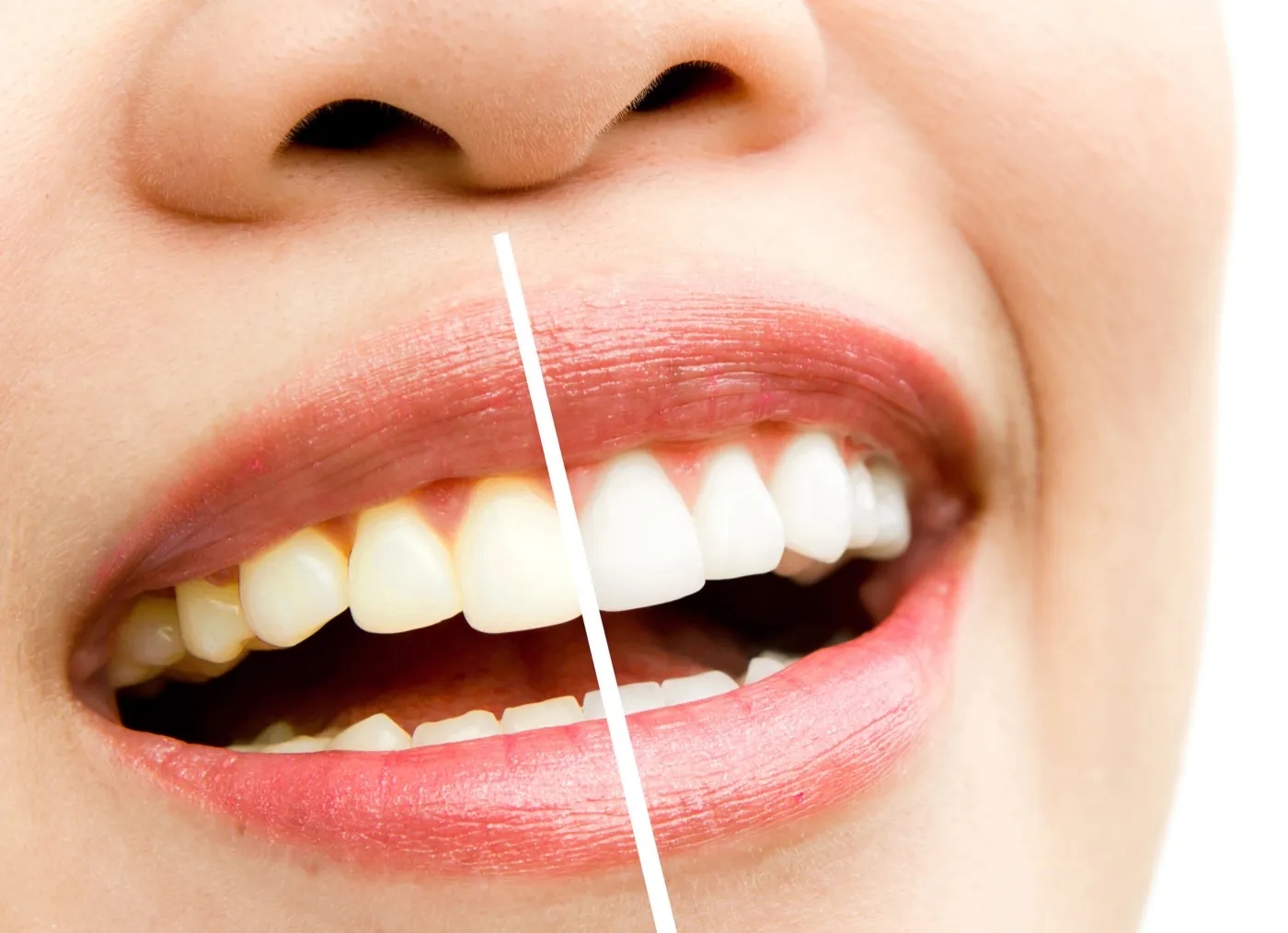
Is teeth whitening suitable for you?
Talk to a dentist first. The ODA says your teeth need to be healthy and strong enough, and the dentist can tell you which method, if any, suits you and what to expect. Mention any tooth sensitivity, gum disease, oral infection or bone loss; dentists quoted in the ODA magazine say thinner gums may be at risk of receding if the bleaching agent irritates them.
The ODA magazine says whitening is generally not recommended for children under 16. The CDA says bleaching is not appropriate for teeth with decay or teeth that have lost minerals (demineralized teeth), and should wait until after pregnancy, because it is elective and the products have not been tested in pregnant women.
What results can you expect?
The CDA says not all discolouration responds to bleaching, and results may be irregular or unsatisfactory when it comes from tetracycline staining, fluorosis, an injury or normal ageing. The ODA magazine says how much teeth whiten depends on how many teeth are involved, how severe the discolouration is and their natural colour.
A dentist quoted in later issues of the magazine adds that existing dental work and even the position of the teeth can affect the outcome, and that not everything may be possible for every patient.
How long do the results last?
Whitening is not permanent. The CDA says the effect can last up to three years; for home whitening kits, Health Canada says results may last up to six months.
What about crowns, fillings and veneers?
Bleaching whitens natural enamel only, not caps, crowns, veneers, fillings or dentures, and the CDA notes that dental work may look darker once the natural teeth are lighter. It also says there is some evidence that bleaching reduces bond strength, which may affect the seal of composite fillings and of brackets bonded to the teeth for braces.
With professional techniques the whitening product can be placed to avoid crowns, bridges or implants. If you are planning new fillings, crowns or other restorative work, the ODA magazine suggests discussing whitening with your dentist first, so the new material can be matched to your new tooth colour.
What happens during in-office whitening?
When whitening is done in a dental office, the RCDSO says the dentist is responsible for examining you, deciding which X-rays are needed, diagnosing the cause of the discolouration, planning the treatment and getting your consent.
Your gums are then shielded from the whitening material, with what the RCDSO calls a liquid dam or a rubber dam. In an Ontario dental office, only a dentist or a dental hygienist may apply the whitening agent directly to your teeth.
Some agents are activated with a laser, a light or a heat lamp. The ODA magazine says a light gives a faster result; the CDA says research does not show it makes teeth whiter, and that light and laser techniques have had little scientific assessment.
How many visits does teeth whitening take?
It depends on the method. The ODA magazine says in-office results are usually seen in one session. Take-home whitening from a dentist usually starts with moulds of your teeth for custom trays.
Health Canada says typical home whitening kits are used over 10 to 14 days.
What are the alternatives to in-office whitening?
Leaving your teeth as they are is also an option: the ODA says that in healthy teeth, darkening with age is cosmetic.
With take-home whitening under a dentist's care, you put whitening gel in custom trays and wear them for a couple of hours during the day or overnight. According to the ODA magazine, it uses less hydrogen peroxide than in-office whitening, so reaching the shade you want takes longer.
Dentists quoted in the ODA magazine say store-bought strips and gels have lower peroxide concentrations than products from a dentist, so results come more slowly, though you eventually reach the same brightness. The magazine advises caution with products containing abrasives such as baking soda or charcoal, because you do not want to wear down your enamel.
Does teeth whitening hurt?
It can make your teeth sensitive. The ODA magazine says most whitening systems use a form of peroxide, which can increase sensitivity in some people, usually temporarily; a toothpaste designed to relieve sensitivity can help.
As a general rule, the magazine says, lower hydrogen peroxide concentrations are less likely to bother sensitive teeth but take longer to whiten. In-office products use higher concentrations, though a dentist quoted there notes that some of these include agents to offset sensitivity. Another says people with fillings, crowns or other restorations on their front teeth are at higher risk of sensitivity.
What are the risks of teeth whitening?
The CDA lists tooth sensitivity and irritation of the gums and other soft tissues as the most common short-term effects and says they are transient. It says the effects of long-term bleaching are unknown, and it does not recommend repeated bleaching beyond the initial treatment, because it may lead to pitting of the teeth and damage to the pulp (the nerve).
A dentist quoted in the ODA magazine says bleaching does not weaken the tooth, though another mentions preliminary literature showing that enamel may lose minerals (demineralize) if at-home products are used aggressively. The magazine also warns that overusing or misusing whitening agents can damage the surface lustre of existing dental work.
What should you do after whitening?
For two to three days, a dentist quoted in the ODA magazine advises avoiding anything that would stain a white T-shirt or tablecloth, as the tooth is a little more porous for a while.
If you are whitening at home and sensitivity or irritation persists or worsens, or other side effects appear, the CDA advises stopping the product and seeing your dentist.
The ODA's general advice on sensitive teeth is to call your dentist right away if they are also sensitive to pressure, if a few weeks of desensitizing toothpaste does not help, if the pain lasts longer than an hour, or if the gums around them are changing colour. You can call the clinic during opening hours.
How are fees for whitening set?
Each dentist in Ontario sets their own fees, which reflect factors such as the complexity of the treatment, the time it takes and the materials used, and costs vary from office to office. The ODA's yearly Suggested Fee Guide is a reference only, and a fee may be above or below it. The RCDSO says a dentist must tell you if they intend to charge more than the guide lists.
The ODA explains that a cost estimate comes after an examination and before treatment, and that it is an estimate because costs can change. A benefits plan defines what it pays for, and even needed treatment may not be covered; your dental office can request a predetermination of coverage, which is not a promise of payment.
Teeth Whitening: common questions
It can be, when it is used in moderation and with the proper instructions for each method, according to a dentist quoted in the Ontario Dental Association's patient magazine, who recommends seeing a dental professional first. The ODA says your teeth have to be healthy and strong enough, and a dentist can tell you which method, if any, suits you. Sensitive teeth and irritated gums or other soft tissues are common in the short term and pass, according to the Canadian Dental Association. The CDA also says the effects of long-term bleaching are unknown.
It can cause tooth sensitivity, which usually eases over time; a toothpaste made to relieve sensitivity can help. Products with a lower hydrogen peroxide concentration are generally less likely to bother sensitive teeth, though they whiten more slowly. If sensitivity from a whitening product persists or gets worse, stop using it and see your dentist.
It is not permanent. The Canadian Dental Association says the effect can last up to three years and that smoking and staining food and drink affect it. Touch-up kits can be ordered from a dentist, but ask before using one, because the CDA does not recommend repeated bleaching beyond the initial treatment.
Mainly time, according to the Ontario Dental Association's patient magazine. Dentists quoted there say products from a dentist contain higher concentrations of carbamide peroxide or hydrogen peroxide, so results come sooner, while over-the-counter products eventually reach the same brightness more slowly. A dentist can also check first that your teeth are healthy enough, and place the product so it avoids crowns, bridges or implants.
No. Whitening changes the colour of natural enamel only, so crowns, veneers, fillings and dentures keep their colour and may look darker next to whitened teeth. If you are planning new fillings, crowns or other restorative work, ask your dentist about whitening beforehand so the new material can be matched to your new shade.
Children under 16, people whose teeth have decay or have lost minerals (demineralized teeth), and people who are pregnant are generally advised not to whiten. The Ontario Dental Association's patient magazine gives the age, and the Canadian Dental Association says bleaching is not appropriate for decayed or demineralized teeth and should be deferred until after pregnancy. If you have sensitive teeth, gum disease, an oral infection or some bone loss, talk to your dentist before whitening.
Anything that would stain your teeth, for the first two to three days, because a dentist quoted in the Ontario Dental Association's patient magazine says the tooth is a little more porous for a short time after whitening. Over the longer term, the Canadian Dental Association says smoking and staining food and drink affect how long the result lasts.
It varies: each dentist in Ontario sets their own fees, so there is no single price. The Ontario Dental Association's Suggested Fee Guide is a reference point that dentists and dental plans may use, and fees can sit above or below it. After an examination, and before treatment begins, the dentist gives you an estimate, and the Royal College of Dental Surgeons of Ontario says you can and should ask questions about it.
Visiting Ur Dental in North York
Ur Dental is at 6239 Bathurst Street, at Bathurst and Steeles. On-site parking is available.
Hours: Tuesday to Friday 10 a.m. to 6 p.m., Saturday and Sunday 9 a.m. to 5 p.m., closed Monday.
Book an AppointmentSources
- Ontario Dental Association: Cosmetic Dentistry
- Ontario Dental Association: Aging
- Ontario Dental Association: Smoking, Vaping and Marijuana
- Ontario Dental Association: YourOralHealth.ca magazine, Summer/Fall 2017, "Brighter Whites"
- Ontario Dental Association: YourOralHealth.ca magazine, Spring/Summer 2019, "Getting the Pearly Whites You Want"
- Ontario Dental Association: YourOralHealth.ca magazine, Spring 2012 (whitening questions and answers)
- Ontario Dental Association: Tooth Sensitivity
- Ontario Dental Association: Dental Costs Explained
- Ontario Dental Association: Dental Treatment Estimates
- Ontario Dental Association: Dental Benefits Explained
- Royal College of Dental Surgeons of Ontario: The ins and outs of tooth whitening procedures
- Royal College of Dental Surgeons of Ontario: Fees & Charges (Resources for Patients)
- Canadian Dental Association: CDA Position on Teeth Bleaching
- Canadian Dental Association: Teeth Whitening
- Health Canada: The Safe Use of Home Tooth Whitening Kits
Clinical information last reviewed October 9, 2026