About the service
Root canal treatment is a way to try to save a tooth whose soft inner tissue, the pulp, has been injured or infected. As the Ontario Dental Association (ODA) describes it, the tooth is opened, the infected tissue is removed, and the space is filled and sealed to prevent further infection.
Keeping your own tooth avoids replacing it with an artificial one, such as an implant, and helps keep your other teeth from drifting out of line. But the ODA says a tooth should have a root canal only if enough of it is left to restore; otherwise it should be taken out.
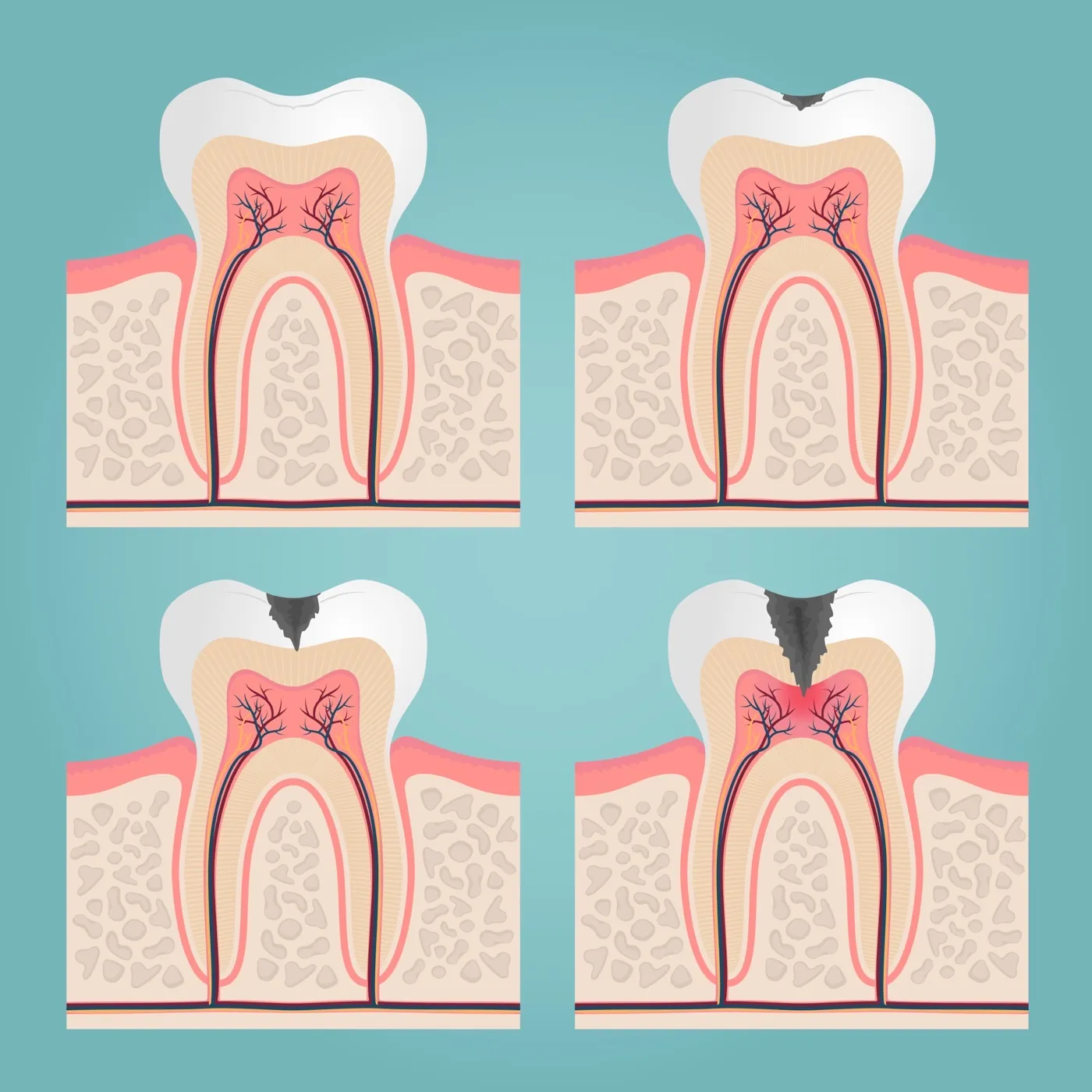
What is the pulp, and how is it damaged?
Inside the hard part of every tooth is a space filled with soft tissue, the pulp, made up of nerves, blood vessels and cells. Decay or an injury can damage this tissue or make it diseased.
A dentist quoted in the ODA's patient magazine explains that the pulp can become inflamed or infected through deep decay, deep fillings, faulty crowns, a fracture in the tooth or, at times, trauma. Left untreated, an infection can spread through the root tips into the surrounding tissue and bone and cause a painful jaw abscess.
When is root canal treatment needed?
The ODA says a root canal is done when decay or a fracture is close to or into the pulp and the pulp has been injured. The ODA's patient magazine explains that early decay is treated with a filling, and that a root canal may be needed once decay is too deep for a filling to restore the tooth.
The Canadian Dental Association (CDA) explains that an infected pulp may cause pain, swelling or both, and that a dentist may find the infection on an X-ray or from other changes in the tooth. The ODA's patient magazine adds that a root canal is sometimes the only viable way to save a tooth.
Can antibiotics treat it instead?
Not on their own. Dentists in the ODA's patient magazine explain that antibiotics cannot reach an infection inside a dead tooth, because it no longer has a blood supply, so the infected material has to be removed and the space filled.
What happens during a root canal?
The Royal College of Dental Surgeons of Ontario (RCDSO) requires your dentist to take your medical history, including medications, before treatment. The ODA's patient magazine and the CDA describe these steps.
Freezing: the tooth is numbed with a local anaesthetic, and you stay awake.
Protection: a rubber dam is placed around the tooth to keep bacteria in your saliva away from it.
Cleaning: through an opening in the tooth, very fine instruments remove the damaged pulp and clean and enlarge the root canal system.
Filling: the cleaned canals are filled and sealed.
Closing: the opening is closed with a temporary or a permanent filling, and the tooth is restored with a permanent filling or a crown.
How many visits does a root canal take?
According to the ODA's patient magazine and the CDA, a root canal may be done in one appointment or two. More are sometimes needed, the magazine adds, depending on the number and condition of the roots, and the extent of the infection can affect both the procedure and your recovery.
What if I feel anxious about treatment?
If you feel anxious, tell your dentist. The ODA lists options that dentists may offer anxious patients, such as anti-anxiety medication before an appointment, nitrous oxide or conscious sedation during it, or general anaesthesia; ask the clinic whether it provides any of them. In Ontario, a dentist needs authorization from the RCDSO to give any level of sedation in a dental office.
What should I expect after a root canal?
The ODA's patient magazine advises that chewing on the treated tooth is likely to be uncomfortable for a few days, so plan meals that are comfortable to eat. It also suggests discussing suitable pain medication at the appointment if discomfort is expected, and asking your dentist before taking medicine for discomfort you did not expect.
The CDA says the tooth may be tender for the first week or two, but that bad pain or swelling is not common; if you have either, call the clinic during opening hours.
Will I need a crown afterwards?
An ODA patient fact sheet says most teeth that have had root canal treatment will need a crown to support what remains of the tooth. Not every one does, the ODA's patient magazine explains, but a crown is often advised when the tooth has been significantly weakened. The CDA adds that a back tooth will likely need one because of chewing forces.
What are the risks of root canal treatment?
The CDA notes that, in rare cases, a treated tooth needs a second root canal treatment, in which the root canal filling is removed and the canal is cleaned, reshaped and refilled. Root canal surgery is sometimes needed when regular treatment cannot be done or has not worked, and some teeth still have to be removed despite treatment.
A treated tooth can still get a cavity or gum disease, and at regular examinations your dentist checks how a root canal is holding up. Ask your dentist which risks apply to your tooth before you decide.
What are the alternatives?
The ODA suggests asking your dentist why a treatment is recommended, what the alternatives are, and what happens if you refuse or delay it. It describes removing the tooth as the course to take when too little of it is left to restore, and recommends replacing it, for example with a bridge, an implant or a denture.
If you decline a recommended treatment, the RCDSO expects your dentist to explain what may follow, such as the problem getting worse, more treatment and higher costs. The ODA notes that you can always ask for a second opinion.
Who provides root canal treatment, and when are you referred?
The ODA notes that general dentists can do root canals, and that more difficult and complex cases may be referred to an endodontist, the dental specialist for the inside of the tooth.
The ODA's patient magazine explains that a general dentist should refer to a clinician with more specialized skill when a procedure falls outside their training. The RCDSO expects the dentist to keep assessing the tooth during treatment, judge how complex the case is, and decide whether to treat or refer. If an endodontist does the root canal, the CDA explains, they place a temporary filling and send you back to your dentist to restore the tooth.
How are fees for a root canal set?
Each Ontario dentist sets their own fees, which may be above or below the ODA's Suggested Fee Guide, weighing factors the ODA lists such as the complexity of the treatment, the time it takes, materials, and the office's location and overhead.
After your examination, the ODA explains, your dentist gives you a cost estimate before going ahead, and it can only be an estimate because the plan may change. The RCDSO says an estimate may be given as a range and should include follow-on treatment, with a crown after a root canal as its example, and that your dentist must tell you if they intend to charge above the ODA guide.
If you have dental benefits, a dental office can send your plan a pre-treatment form to get a predetermination of benefits, which shows what the plan covers but is not a promise that it will pay.
Ur Dental accepts the Canadian Dental Care Plan (CDCP). We bill CDCP directly where the plan covers the service; you pay any co-payment.
Root Canal: common questions
It is a treatment that cleans the infected tissue out of a tooth, then fills and seals the space, in an attempt to save the tooth. According to the ODA, you may need one when decay or a crack reaches into or near the pulp, the soft tissue inside the tooth, and that tissue has been injured. Dentists in the ODA's patient magazine add that antibiotics alone will not heal an infection inside the tooth, which is why the infected material is removed.
The treatment is carried out under local anaesthetic, known as freezing, and you are awake for it. If discomfort is expected afterwards, the ODA's patient magazine suggests asking your dentist about pain medication at the appointment. Let your dentist know beforehand if you feel anxious.
It may take one or two, the ODA's patient magazine and the CDA say, and sometimes more, depending on how many roots the tooth has and what condition they are in. A crown, if the tooth needs one, is most often done at a separate appointment, and the ODA notes that a crown usually takes more than one visit.
Often, but not always. Whether a tooth needs a crown or a filling depends on how strong the rest of it is, the CDA explains, and a back tooth is likely to need a crown because of the force of chewing. If a crown is planned, the RCDSO says your cost estimate should include it.
The ODA's patient magazine says to expect some discomfort when you chew on the tooth for a few days, so choose food that is comfortable to chew. The CDA says tenderness may last a week or two and that bad pain or swelling is uncommon; if it happens, contact the clinic during opening hours. The magazine also notes that whether you feel like going back to work afterwards depends more on how comfortable you are with the appointment than on the procedure itself.
It depends on how much of the tooth is left. According to the ODA, a root canal should be done only when enough of the tooth remains to restore it; otherwise the tooth should be removed, and replacing it is recommended. Where the tooth can be kept, dentists in the ODA's patient magazine describe saving it as the first choice. Before you decide, the ODA suggests asking about the alternatives and what happens if you wait.
General dentists can perform root canals; the CDA and the Canadian Academy of Endodontics say the treatment is routinely done by dentists across Canada. Harder, more complex cases may be sent to an endodontist: endodontics is a specialty the RCDSO recognizes in Ontario, and only a dentist who holds its specialist certificate may use the specialist title. The RCDSO also asks the treating dentist to keep weighing the complexity of the case and to choose between treating it and referring you.
Fees differ from office to office, because every dentist in Ontario sets their own. Your dentist gives you an estimate after the examination and before treatment starts; the RCDSO says it should include follow-on work such as a crown, and that you must be told if your dentist intends to charge more than the ODA's suggested fee guide. With dental benefits, the office can ask your plan for a predetermination before treatment, which sets out what is covered without committing the plan to pay.
Visiting Ur Dental in North York
Ur Dental is at 6239 Bathurst Street, at Bathurst and Steeles. On-site parking is available.
Hours: Tuesday to Friday 10 a.m. to 6 p.m., Saturday and Sunday 9 a.m. to 5 p.m., closed Monday.
Sources
- Ontario Dental Association: Common Dental Procedures
- Ontario Dental Association: Dental Specialists
- Ontario Dental Association: Cosmetic Dentistry (Caps and Crowns)
- Ontario Dental Association: General Dental Examination
- Ontario Dental Association: Stress and Anxiety
- Ontario Dental Association: Dental Costs Explained
- Ontario Dental Association: Dental Treatment Estimates
- Ontario Dental Association: Dental Benefits Explained
- Ontario Dental Association: YourOralHealth.ca magazine, Spring/Summer 2019, Saving a Tooth: dispelling myths about root canals
- Ontario Dental Association: YourOralHealth.ca magazine, Winter 2018, Ask Your Dentist (I need a root canal, and I have questions)
- Ontario Dental Association: Your Oral Health magazine, Fall/Winter 2015-16, Patient Fact Sheet: Common Dental Procedures
- Royal College of Dental Surgeons of Ontario: Use of qualifications, titles, and designations
- Royal College of Dental Surgeons of Ontario: Clinical Competency, Endodontics
- Royal College of Dental Surgeons of Ontario: Fees and Charges (Resources for Patients)
- Royal College of Dental Surgeons of Ontario: Ensuring patients understand and agree to the cost of treatment
- Royal College of Dental Surgeons of Ontario: Informed refusal
- Royal College of Dental Surgeons of Ontario: Sedation and Anesthesia
- Royal College of Dental Surgeons of Ontario: Resources for Patients, Frequently Asked Questions
- Canadian Dental Association: Root Canal Treatment
Clinical information last reviewed October 9, 2026