About the service
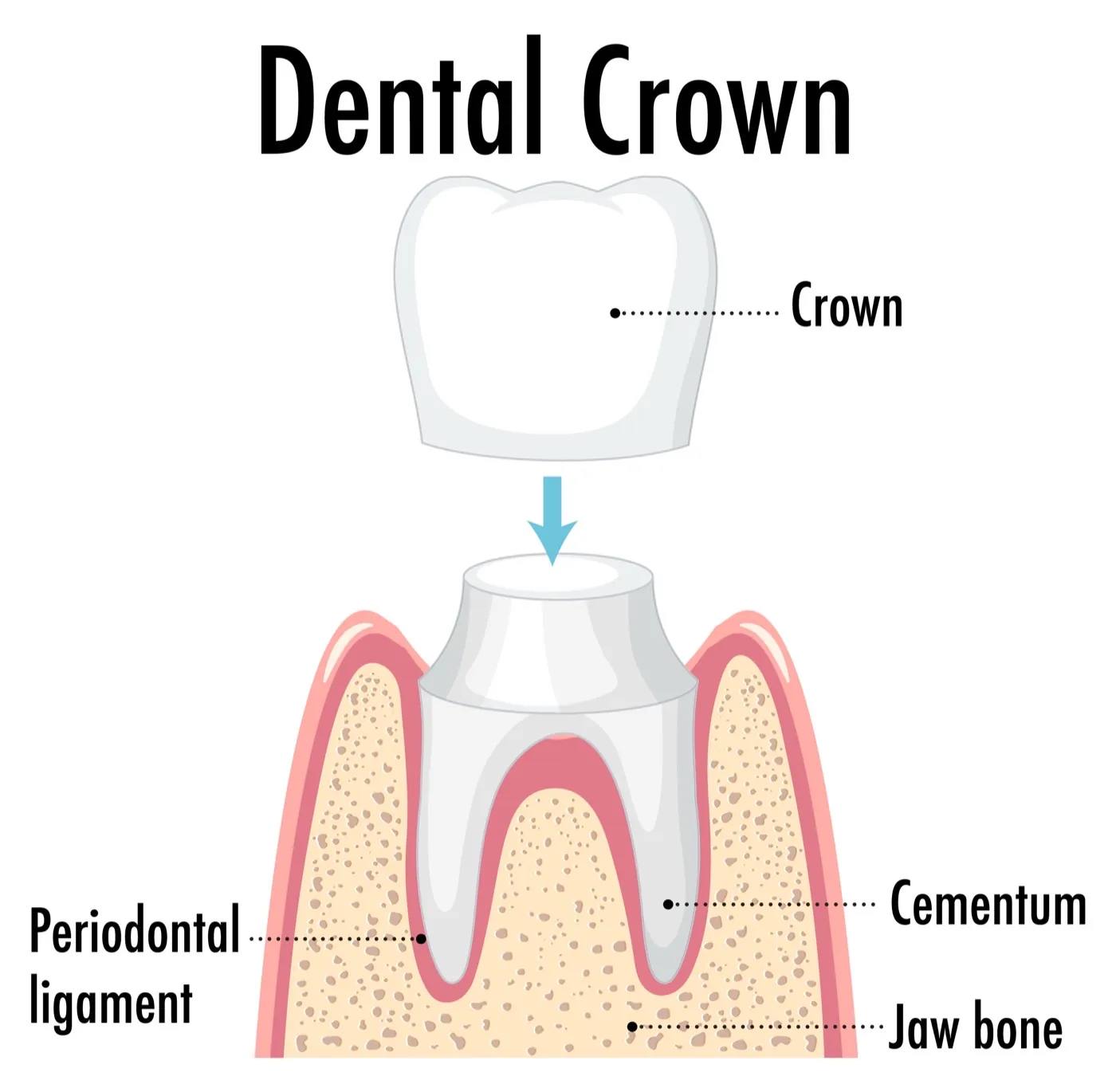
A dental crown, also called a cap, is a covering that goes over a tooth. Dentists use crowns on teeth that are broken, misshapen, badly stained or damaged by decay.
The Canadian Dental Association describes it as a hollow, artificial tooth that sits over the natural one to cover and protect it. Our dentists provide crowns at the clinic at Bathurst and Steeles in North York.
When is a dental crown recommended?
The Ontario Dental Association explains that a serious break in a tooth may need a root canal, and the tooth may need a crown as well.
According to the Canadian Dental Association, crowns are often used after root canal treatment, to support a large filling, or to fix a tooth that has broken. Teeth that are discoloured or misshapen can also be crowned.
A crown can sit on a natural tooth or on a dental implant. Crowns are also part of a bridge, which the Ontario Dental Association describes as two crowns on the anchoring teeth with the replacement tooth in the centre.
Before any treatment, the dentist reviews your medical history and symptoms and examines your mouth.
What are crowns made of?
The Ontario Dental Association lists acrylic, metal, porcelain and porcelain bonded to metal as crown materials. All-porcelain crowns are closer in appearance to natural teeth and usually go on front teeth, while porcelain bonded to metal is stronger and suits back teeth better.
If you also want whiter teeth, raise it before the crown is made. Dentists quoted in the Ontario Dental Association's patient magazine explain that crowns do not whiten like natural teeth, and suggest talking about whitening first so the crown can be matched to the new shade.
What happens during a crown procedure?
A crown is prepared by your dentist and usually takes more than one visit.
What happens at the first visit?
The tooth is numbed with a local anaesthetic, often called freezing. The dentist then files the tooth down so the crown can fit over it, and takes an impression of your teeth and gums.
A temporary cap is placed over the tooth to protect it while the permanent crown is being made.
What happens when the permanent crown is fitted?
At the next visit the dentist takes off the temporary cap. Before the permanent crown is cemented in place, its fit, colour and bite are checked. The crown is made to match your natural teeth in colour and shape.
How many visits does a crown take?
A dentist interviewed in the Ontario Dental Association's patient magazine explains that some crowns can be done in one longer appointment and others take two, depending on the process and the materials.
Some cases need extra steps, such as gum treatment, orthodontic work or a root canal, which can mean more appointments. Ask your dentist how many visits you will need.
What if I am worried about discomfort?
The tooth is numbed before any filing begins. Tell your dentist if your tolerance for pain is low, even with local anaesthetic.
If dental treatment makes you anxious, say so. The Ontario Dental Association notes that dentists can offer options to help anxious patients.
How do I look after a crown?
Care for a crowned tooth as you would your natural teeth: brush at least twice a day and floss every day.
Avoid chewing hard objects such as ice or pens, and do not use your teeth to open packages or cut tape. Biting ice can crack or break teeth and dental work.
Prolonged grinding can crack, chip or break teeth; if you grind your teeth, a dentist can make a custom mouth guard to prevent further damage.
Have a dental examination at least once a year, or more often if your dentist advises it; it includes checking how crowns and other dental work are holding up.
When should I call the dentist after getting a crown?
If you have unexpected discomfort afterwards, speak to your dentist before taking any medication, since health conditions and allergies can limit the choice.
Constant or severe pain in the mouth is a reason to call your dentist right away. Call the clinic during opening hours, listed further down this page. Ask the clinic in advance what to do if you need care when it is closed.
What are the risks of a dental crown?
A crown can have an unwanted outcome even when the treatment was appropriate. The Royal College of Dental Surgeons of Ontario (RCDSO) gives a crown breaking at the gum line as one example, and decay under a crown as something that can lead to further treatment and added cost.
The Ontario Dental Association's patient magazine also names a faulty crown as one cause of a tooth becoming inflamed or infected and needing root canal treatment. The Canadian Dental Association adds that porcelain can chip more easily, and porcelain bonded to metal may show metal near the gum line in some cases.
What are the alternatives to a crown?
When a tooth has a cavity or a small break, a filling may be enough.
A veneer is sometimes used instead, but the Ontario Dental Association says only when enough tooth structure and enamel remain.
When a tooth needs a root canal, the Ontario Dental Association says it should be treated only if enough of the tooth is left to restore; otherwise it should be taken out.
What should I ask before I agree to a crown?
Your dentist must have your informed consent before treatment starts, which means discussing the proposed treatment and its risks with you first. Ask questions until you understand the treatment and its cost.
The Ontario Dental Association suggests asking why the treatment is recommended, what the alternatives are, what happens if you refuse or delay it, and how to maintain it. If you have concerns about the plan, you can seek a second opinion, which will probably mean paying for another examination.
Who provides crowns, and when is a specialist involved?
A general dentist can provide a crown: the Canadian Dental Association notes that after a root canal, your own dentist or a specialist may restore the tooth with a crown.
Complex treatment may lead to a referral to a dental specialist, who has extra training in one area of dentistry. Prosthodontics, the specialty concerned with restoring natural teeth and replacing missing ones, is one of the dental specialties the RCDSO recognizes in Ontario.
A specialist usually works with you and your general dentist together, and you can also contact one yourself.
How are fees for a crown set?
Prices are not listed here because the cost depends on your tooth and the treatment it needs, and estimates are rarely given without an examination. After examining you, the dentist gives you an estimate before going ahead; costs can still change once treatment is under way.
The Ontario Dental Association publishes a yearly Suggested Fee Guide with a suggested fee for each procedure. Dentists set their own fees, which may be above or below the guide, but must tell you if they intend to charge more than it. Fees vary with how complex the treatment is, how long it takes and the materials used.
When a crown is made by a commercial dental laboratory, the Ontario Dental Association says the laboratory's charge is added to the dentist's fee at the exact amount the laboratory billed. If you have a dental benefits plan, you can send it an estimate covering both for a predetermination, which shows what may be covered but does not promise coverage.
Ur Dental accepts the Canadian Dental Care Plan (CDCP). We bill CDCP directly where the plan covers the service; you pay any co-payment.
Dental Crowns: common questions
A crown, or cap, is a covering placed over a tooth that is broken, misshapen, badly stained or decayed. A broken tooth may need one, as may a tooth whose structure has been significantly compromised after a root canal. A smaller break or a cavity may only need a filling, and a veneer is used instead of a crown only if enough tooth structure and enamel remain. Your dentist recommends an option after reviewing your medical history and examining your mouth.
A crown usually takes more than one visit. At the first visit the tooth is frozen and filed down, an impression of your teeth and gums is taken, and a temporary cap is put on until the permanent crown is ready; at the next visit the temporary cap comes off and the permanent crown is cemented on. Some crowns can be finished in a single longer appointment, according to a dentist interviewed for the Ontario Dental Association's patient magazine, and some cases need extra steps, such as gum treatment or a root canal, which can mean more appointments. Your dentist can tell you what your own treatment will involve.
Before the tooth is filed down, it is frozen with a local anaesthetic. Let your dentist know if you have a low pain tolerance even when frozen, or if dental visits make you anxious, so you can talk about your options. After the appointment, check with your dentist before taking any medication for unexpected discomfort, and contact your dentist right away if the pain is constant or severe.
Not always. A dentist interviewed for the Ontario Dental Association's patient magazine says not every tooth that has had a root canal needs a crown, but that a crown is often recommended to help save the tooth when its structure has been significantly compromised. After the root canal your dentist will tell you how the tooth should be restored, and the crown is most often done at a separate appointment.
Crowns are made from several materials: the Ontario Dental Association names acrylic, metal, porcelain and porcelain bonded to metal. All-porcelain crowns, which look closer to natural teeth, are usually used at the front of the mouth, while porcelain bonded to metal, which is stronger, is better suited to the back. The Canadian Dental Association notes trade-offs, such as porcelain chipping more easily and metal sometimes showing near the gum line with porcelain fused to metal, and your dentist will suggest a material suited to the tooth being treated.
The Canadian Dental Association says that with good care a crown can last 10 years or longer; how long a particular crown lasts cannot be promised. Clean it as you clean your other teeth, brushing at least twice a day and flossing daily, and do not bite ice, chew other hard objects or use your teeth as tools. Regular examinations, at least yearly or as often as your dentist recommends, let the dentist check how the crown is holding up.
There is no single price: the fee depends on the tooth and on what treatment it needs, and you receive an estimate after your examination, before treatment begins. Each Ontario dentist sets their own fees, and a dentist who plans to charge more than the Ontario Dental Association's Suggested Fee Guide has to tell you. When a crown is made by a commercial dental laboratory, the Ontario Dental Association says the laboratory's charge is added to the dentist's fee at the exact amount the laboratory charged. If you have a dental plan, you can send it the estimate to see what may be covered before you go ahead.
A general dentist can place a crown. The Canadian Dental Association, for example, notes that after a root canal, a crown may be placed by your own dentist or by a specialist. If the treatment you need is complex, the general dentist treating you may refer you to a dental specialist, such as a prosthodontist, who restores natural teeth and replaces missing ones. You can also get in touch with a specialist yourself.
Visiting Ur Dental in North York
Ur Dental is at 6239 Bathurst Street, at Bathurst and Steeles. On-site parking is available.
Hours: Tuesday to Friday 10 a.m. to 6 p.m., Saturday and Sunday 9 a.m. to 5 p.m., closed Monday.
Sources
- Ontario Dental Association: Cosmetic Dentistry
- Ontario Dental Association: Dental Emergencies
- Ontario Dental Association: Common Dental Procedures
- Ontario Dental Association: YourOralHealth.ca magazine, Winter 2018
- Ontario Dental Association: YourOralHealth.ca magazine, Spring/Summer 2019
- Ontario Dental Association: YourOralHealth.ca magazine, Summer/Fall 2017
- Ontario Dental Association: Stress and Anxiety
- Ontario Dental Association: Brushing and Flossing
- Ontario Dental Association: Teeth Grinding (Bruxism)
- Ontario Dental Association: General Dental Examination
- Ontario Dental Association: Your Dental Team
- Ontario Dental Association: Dental Specialists
- Ontario Dental Association: Dental Treatment Estimates
- Ontario Dental Association: Dental Costs Explained
- Ontario Dental Association: Commercial Laboratory Charges
- Ontario Dental Association: Dental Benefits Explained
- Royal College of Dental Surgeons of Ontario: Fees & Charges (Resources for Patients)
- Royal College of Dental Surgeons of Ontario: Common complaints and how to avoid them
- Royal College of Dental Surgeons of Ontario: Use of qualifications, titles, and designations
- Canadian Dental Association: Crowns
- Canadian Dental Association: Root Canal Treatment
- Canadian Dental Association: Bridges
Clinical information last reviewed October 9, 2026